

SAN FRANCISCO (CN) - Two California senators rallied support on Monday for a new bill to provide long-term funding for the Bay Area Rapid Transit system, one of the country's largest heavy-rail transit networks, which faces potential service cuts related to an upcoming $350 to $400 million budget shortfall.
Without big adjustments, state senators Scott Wiener and Jesse Arreguin warned that BART's budget difficulties could significantly restrict transit service in the area and affect millions of commuters.
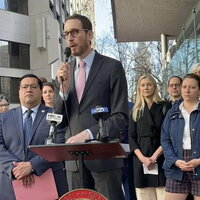
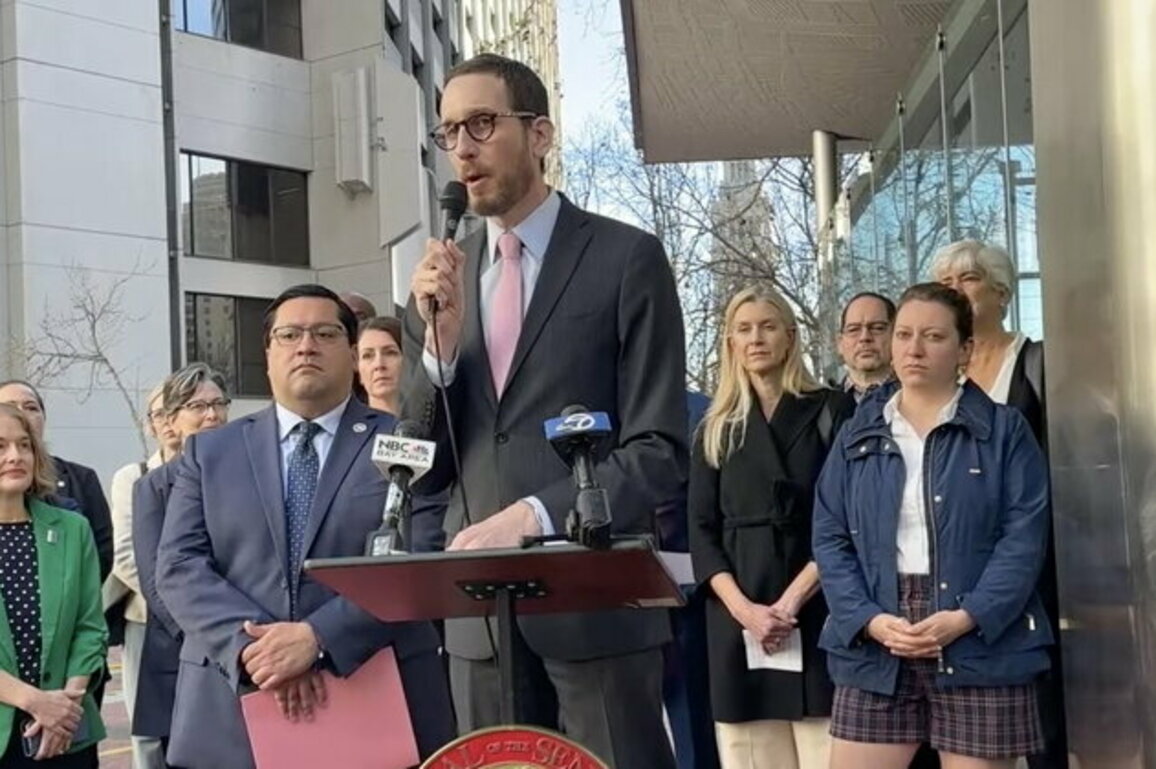
"It's not an exaggeration to say that the Bay Area faces a very frightening situation when it comes to public transportation," Wiener said in a press conference.
The senators' announcement comes as the transit system approaches a dreaded "fiscal cliff." Because of declining ridership rates, the agency's budget is predicted to fall short by 2027 if more public funding can't be found.
In a press conference at Embarcadero BART station, the senators were joined by local politicians, union leaders and public transit advocates who warned of service cuts and an impending future where trains arrive just once an hour, weekend service is gone entirely and city streets are clogged with car traffic.
"If we do nothing, we will see massive service cuts at our major public transit agencies and that will be horrific for the entire Bay Area," Wiener said.
The bill, which Arreguin called the "Connect Bay Area Act," would allow a new sales tax measure to appear on the November 2026 ballot to provide funding for BART. Although details aren't set in stone, Wiener said the "10-to-15-year" tax would be "half a cent," but likely higher in San Francisco to address its significant ridership challenges.
Arreguin also said that the new tax isn't the only solution their teams are looking at. The senator announced he has submitted a budget request to the state Legislature for an additional $2 billion to "provide a bridge" for agencies while they work to secure long-term funding.
Some leaders acknowledged that the extra funding is a hard sell for voters, especially as the cost of living continues to rise in the Bay Area and as BART faces renewed criticism around rider safety.
"We know this is a difficult time to be asking the public to raise taxes to fund transit. We know that our residents are feeling the strain of the rising cost of living, and they've also been frustrated with our transit services," said Christina Lawson, chair of the Bay Area Council's board of directors.
Lawson said the funding would be attached to a comprehensive review of the system's financial efficiency, which will be necessary to restore public confidence.
Arreguin also noted that public transit will be sorely needed for upcoming events, including the 2026 FIFA World Cup and the 2026 Super Bowl LX.
Even new San Francisco Mayor Daniel Lurie chimed in on the issue through a representative who acknowledged the system was on "the brink of collapse," and voiced their support for the bill.
"It's a really smart regional solution to a regional problem," Alicia John-Baptiste, the mayor's chief of infrastructure, climate and mobility, told reporters.
Before the pandemic, money from passenger fares and parking fees covered nearly 70% of the costs to run BART. However, only around 25% of operating costs are covered by fares today, a change the agency largely attributes to remote work.
While most riders have returned to BART post-pandemic, the agency reports they are riding less frequently, resulting in fewer trips and less revenue. This significant funding gap puts BART service at risk.
Other public transport agencies are also expected to suffer without proper funding. The San Francisco Municipal Railway, better known by its nickname "MUNI," could see 20 bus lines cut and a 50% reduction in frequency, while AC Transit and Caltrain may face similar cuts.
BART just recently closed a $35 million budget deficit for the 2026 fiscal year, and future deficits still loom over the agency.
BART is now running service using emergency funds that expire in 2026.
Overall, Wiener stressed the importance of keeping BART running for residents who use it every day to get to work, school or run errands.
"There is no downtown recovery without good transit, and the Bay Area will be severely weakened if we let this happen," Wiener said.
Source: Courthouse News Service